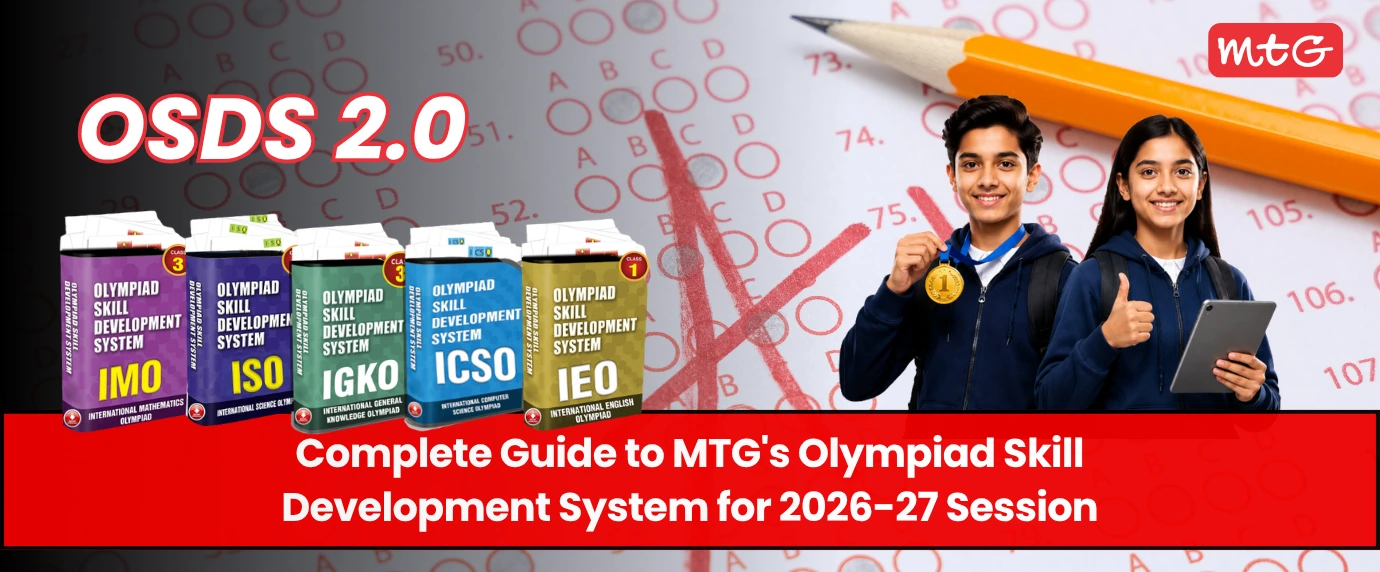
Preparing for Olympiads is about much more than understanding concepts from textbooks. Students are expected to apply their knowledge to solve challenging questions accurately within a limited time. While learning concepts forms the foundation, consistent practice, regular assessment, and performance analysis are equally important for achieving success in Olympiad examinations.
This is where MTG’s Olympiad Skill Development System (OSDS) 2.0 comes into the picture.
Trusted by over one lakh Olympiad aspirants since 2013, OSDS has evolved into a comprehensive Olympiad practice and assessment program. The upgraded OSDS 2.0 is powered by an enhanced Learning Management System (LMS) that offers students a structured and data-driven approach to preparation. Instead of simply attempting mock tests, students receive detailed insights into their performance, helping them identify strengths, improve weak areas, monitor progress, and prepare more strategically.
Whether your child is preparing for the SOF International Mathematics Olympiad (IMO), National Science Olympiad (NSO), International English Olympiad (IEO), International Computer Science Olympiad (ICSO), or International General Knowledge Olympiad (IGKO), OSDS 2.0 provides the tools needed to practise consistently and assess readiness before the actual examination.
In this guide, you’ll learn everything about OSDS 2.0, including its features, benefits, LMS experience, performance analytics, and how it can help students maximise their Olympiad performance.
What is OSDS 2.0?
The Olympiad Skill Development System (OSDS) 2.0 is MTG’s premium Olympiad preparation and performance assessment program designed specifically for students preparing for SOF Olympiads.
Unlike traditional practice books that provide only questions and answers, OSDS combines Olympiad-level mock tests, OMR-based practice, online assessments, performance analytics, and national benchmarking into a single learning ecosystem.
The objective of OSDS is simple—help students practise like they are appearing for the real Olympiad while continuously measuring and improving their performance through meaningful insights.
By simulating the actual examination environment and providing detailed feedback after every test, OSDS enables students to prepare systematically instead of relying solely on repeated reading or random practice.
Understanding the Olympiad Skill Development System
Every competitive examination rewards preparation that is structured and measurable. Olympiads are no different.
Students often spend months studying concepts but may not know:
- How well they perform under exam conditions.
- Which topics need additional revision.
- Whether their accuracy is improving.
- How they compare with other Olympiad aspirants.
OSDS addresses these challenges by introducing continuous assessment into the preparation process.
Instead of waiting until the final Olympiad to evaluate performance, students receive regular opportunities to assess themselves through mock tests that follow the latest SOF examination pattern.
Each assessment generates detailed reports that allow students to make informed decisions about their preparation strategy.
Why Regular Assessment Matters in Olympiad Preparation
Olympiads are designed to test conceptual understanding, logical reasoning, analytical thinking, and application of knowledge. Success depends not only on what students know but also on how effectively they apply that knowledge under time constraints.
Regular assessment offers several advantages:
- Builds familiarity with the examination pattern.
- Develops better time management skills.
- Improves accuracy through repeated practice.
- Helps identify weak concepts early.
- Reduces examination anxiety by creating a realistic test experience.
Without regular assessment, students often overestimate their preparation or fail to recognise recurring mistakes until the actual examination.
OSDS 2.0 bridges this gap by providing structured practice throughout the preparation journey.
How OSDS 2.0 Supports Structured Olympiad Preparation
The upgraded OSDS 2.0 combines offline and online learning resources into a single preparation framework.
Students receive:
- Olympiad-level mock tests.
- OMR sheets for offline exam simulation.
- Online test attempts through a dedicated LMS.
- Instant score generation.
- Detailed solutions.
- Performance analytics.
- Progress tracking.
- National benchmarking.
Rather than simply showing whether an answer is correct or incorrect, the platform helps students understand where improvements are needed and how their preparation evolves over time.
This data-driven approach allows students to focus their efforts more effectively and prepare with greater confidence.
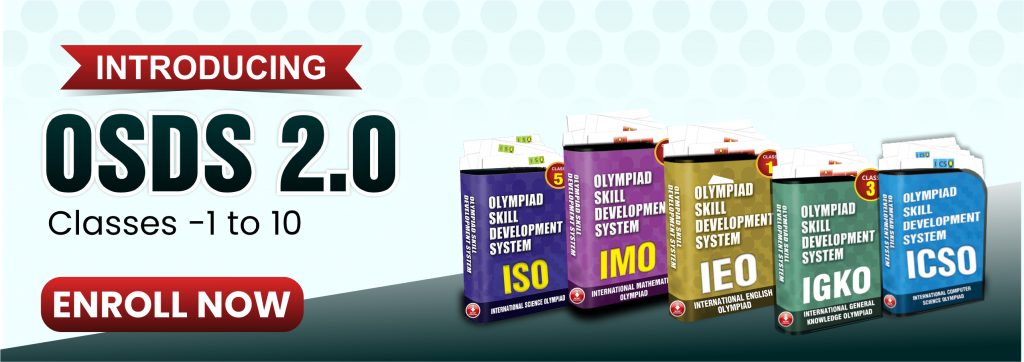
Which Olympiads Does OSDS 2.0 Cover?
OSDS 2.0 has been developed for students appearing in some of India’s most popular school-level Olympiad examinations conducted by the Science Olympiad Foundation (SOF).
Each subject-specific OSDS package is designed according to the latest examination pattern, allowing students to practise questions relevant to their chosen Olympiad.
International Mathematics Olympiad (IMO)
The IMO assesses mathematical reasoning, logical thinking, and problem-solving skills beyond routine classroom exercises.
OSDS for IMO provides students with Olympiad-level practice that encourages them to develop speed, accuracy, and confidence while solving mathematical problems under timed conditions.
National Science Olympiad (NSO)
Science Olympiad questions require students to apply scientific concepts to practical situations rather than relying on memorisation.
OSDS for NSO helps students strengthen conceptual understanding through repeated assessment and detailed performance analysis.
International English Olympiad (IEO)
The English Olympiad evaluates grammar, vocabulary, reading comprehension, and language usage.
With regular mock tests and detailed reports, students can identify areas that require additional practice while improving their overall language proficiency.
International Computer Science Olympiad (ICSO)
Computer Science Olympiads assess computational thinking, logical reasoning, and computer fundamentals.
OSDS helps students become familiar with the examination format while monitoring their progress through structured assessments.
International General Knowledge Olympiad (IGKO)
The General Knowledge Olympiad evaluates awareness across multiple domains, including current affairs, science, history, geography, sports, and more.
Regular practice through OSDS enables students to improve both accuracy and confidence before the actual examination.
Who Should Use OSDS 2.0?
OSDS 2.0 has been designed for students who want to prepare for Olympiads in a structured and measurable manner.
It is suitable for learners across different performance levels—from first-time Olympiad participants to experienced aspirants aiming for higher ranks.
Students Preparing for SOF Olympiads
Students appearing for IMO, NSO, IEO, ICSO, or IGKO can use OSDS alongside their regular study material to evaluate their readiness before the examination.
The program complements conceptual learning by providing opportunities for regular practice and assessment.
Parents Looking for Measurable Progress
Parents often find it difficult to evaluate whether their child is truly prepared for competitive examinations.
OSDS provides detailed performance reports that help parents understand their child’s strengths, improvement areas, and overall progress throughout the preparation period.
These insights make it easier to support students with focused revision instead of general practice.
Students Who Want Exam-like Practice
Many students perform well during regular study sessions but struggle during examinations due to time pressure or unfamiliarity with the exam format.
OSDS helps recreate the Olympiad experience through structured mock tests, OMR practice, and online assessments, enabling students to become comfortable with the testing environment before appearing for the actual Olympiad.
By practising under conditions similar to the real examination, students can build confidence, improve time management, and reduce exam-day anxiety.
Must Check – Big SOF Updates for 2026-27: New Olympiad Name, Hall of Fame Awards, More Prizes
What’s Included in OSDS 2.0?
OSDS 2.0 has been designed to provide students with a complete Olympiad preparation experience. Instead of offering only mock tests, it combines practice, assessment, analytics, and progress tracking within a single platform. Every feature is intended to help students prepare systematically while understanding their performance after each assessment.
Let’s explore everything included in the program.
8 Olympiad-Level Mock Tests
Mock tests are one of the most effective ways to prepare for competitive examinations. They help students apply concepts, manage time, and become familiar with the examination format.
OSDS 2.0 includes eight Olympiad-level mock tests designed according to the latest SOF examination pattern. These tests simulate the actual Olympiad environment, allowing students to experience the type of questions, difficulty level, and time constraints they are likely to encounter during the examination.
Attempting multiple mock tests also helps students develop consistency and confidence before the final exam.
Why Mock Tests Matter
Regular mock tests help students:
- Understand the latest exam pattern.
- Improve question-solving speed.
- Build accuracy under time pressure.
- Develop confidence before the actual Olympiad.
- Reduce exam-day anxiety through repeated practice.
Instead of appearing for the Olympiad with limited practice, students become familiar with the complete examination experience.
8 OMR Sheets for Offline Practice
Many Olympiad examinations require students to mark answers carefully on an OMR sheet. Even students who know the correct answers may lose marks because of incorrect OMR marking or poor time management.
OSDS 2.0 includes eight OMR sheets that allow students to practise filling answer sheets in an exam-like environment.
Using OMR sheets during mock tests helps students:
- Become comfortable with the marking process.
- Reduce careless mistakes.
- Improve answer selection speed.
- Develop better examination discipline.
Practising with OMR sheets makes the transition to the actual Olympiad smoother and more confident.
Online Test Attempts Through the LMS
Along with offline practice, OSDS 2.0 offers students the flexibility to attempt tests online through its dedicated Learning Management System (LMS).
The online platform creates a structured digital assessment experience where students can take tests conveniently while receiving immediate feedback on their performance.
Since the tests are hosted on the LMS, students can access their assessments, review reports, and monitor their preparation from a single dashboard.
This combination of offline and online practice provides flexibility while maintaining a structured preparation strategy.
Instant Results After Every Test
One of the biggest advantages of online assessment is immediate feedback.
Instead of waiting days to evaluate performance, students receive their results soon after completing the test.
Instant results help students:
- Understand their current level of preparation.
- Identify mistakes while the concepts are still fresh.
- Plan revisions more effectively.
- Stay motivated by tracking improvements after every assessment.
Regular feedback encourages continuous learning rather than delayed evaluation.
Detailed Solutions for Every Question
Learning doesn’t end after completing a mock test.
OSDS 2.0 provides detailed solutions that help students understand the correct approach to every question.
Instead of simply showing the correct answer, detailed explanations encourage students to analyse their mistakes and strengthen conceptual understanding.
Reviewing solutions regularly enables students to:
- Learn alternative solving methods.
- Understand difficult concepts more clearly.
- Avoid repeating similar mistakes.
- Improve problem-solving skills over time.
The combination of practice followed by explanation helps reinforce learning more effectively than repeated testing alone.
Understanding the OSDS 2.0 LMS Experience
The upgraded Learning Management System (LMS) is one of the most significant enhancements in OSDS 2.0.
Rather than functioning as only a test portal, the LMS serves as a central platform where students can access mock tests, monitor progress, review analytics, and continue improving throughout their preparation journey.
Its organised interface allows students to focus on learning while keeping all essential information in one place.
Accessing Your Learning Dashboard
After enrolling in OSDS 2.0, students receive access to a dedicated LMS dashboard.
The dashboard acts as the central hub for all preparation activities, allowing students to:
- Access available mock tests.
- View completed assessments.
- Check performance reports.
- Monitor progress over time.
- Review detailed solutions.
Having all preparation resources available in one place makes the learning experience organised and convenient.
Weekly Structured Content Release
Preparing for Olympiads becomes more effective when learning is spread over time rather than completed in a single sitting.
OSDS 2.0 follows a weekly structured content release, encouraging students to practise consistently throughout the preparation period.
This gradual approach helps students:
- Build a regular study routine.
- Avoid information overload.
- Revise concepts between assessments.
- Stay engaged throughout the preparation cycle.
Consistent practice often produces better long-term learning outcomes than irregular intensive study sessions.
Attempting Tests Online
Students can take mock tests directly through the LMS in an environment designed to resemble the actual examination experience.
The platform enables students to:
- Attempt tests within a specified time.
- Submit responses digitally.
- Receive instant evaluation.
- Access detailed reports immediately after completion.
Repeated online practice also improves familiarity with digital assessments and helps students become comfortable managing time under exam conditions.
Reviewing Reports and Solutions
Learning from assessments is just as important as attempting them.
The LMS enables students to revisit completed tests, analyse reports, and study detailed solutions whenever required.
This continuous review process encourages students to:
- Understand recurring mistakes.
- Strengthen weak topics.
- Measure improvement across multiple tests.
- Refine their preparation strategy before the Olympiad.
Instead of treating each mock test as a standalone activity, students can use every assessment as an opportunity to improve.
Performance Reports and Analytics
One of the distinguishing features of OSDS 2.0 is its emphasis on performance analysis.
Scoring marks alone does not always reveal how a student is progressing. Detailed analytics help students understand why they performed a certain way and what needs improvement.
These insights allow preparation to become more focused, measurable, and data-driven.
Instant Performance Reports
After completing each online assessment, students receive a detailed performance report summarising their results.
These reports provide an overview of performance, helping students evaluate how they have performed in each mock test.
Rather than relying on guesswork, students can make informed decisions about future revision based on actual assessment data.
Topic-wise Strength and Weakness Analysis
Every student has topics they find easier and others that require additional attention.
OSDS 2.0 analyses performance across different topics, helping students identify:
- Areas of strong conceptual understanding.
- Topics requiring more revision.
- Frequently occurring mistakes.
- Subjects needing additional practice.
This targeted approach allows students to spend more time improving weaker areas instead of repeatedly revising concepts they have already mastered.
Accuracy and Speed Analysis
Competitive examinations require students to balance both accuracy and speed.
Answering every question correctly is important, but doing so within the available time is equally essential.
Regular mock tests allow students to gradually improve:
- Question-solving speed.
- Accuracy under time pressure.
- Decision-making during examinations.
- Overall examination efficiency.
As students continue practising, they can observe improvements in both confidence and performance.
Tracking Progress Throughout the Preparation Journey
Preparation is a continuous process.
By attempting multiple assessments over time, students can monitor their progress and observe how their performance changes with regular practice.
Progress tracking helps students:
- Stay motivated.
- Measure improvement objectively.
- Adjust their study strategy when required.
- Enter the Olympiad with greater confidence.
Instead of depending on a single test score, students gain a broader understanding of their overall preparation and readiness for the examination.
National Benchmarking and Leaderboards
Preparing for Olympiads is not just about knowing your own score—it is also about understanding how your performance compares with that of other aspirants. National benchmarking provides students with valuable context by helping them evaluate their performance against a broader group of learners.
OSDS 2.0 includes a National Leaderboard and Performance Benchmarking feature that enables students to assess where they stand and identify opportunities for further improvement.
What is National Benchmarking?
National benchmarking is the process of comparing a student’s performance with that of other students taking the same assessments.
Instead of looking only at marks obtained, benchmarking provides a broader perspective on overall performance. It helps students understand whether they are performing above, below, or close to the average level of other Olympiad aspirants.
This comparison encourages students to evaluate their preparation objectively and make informed decisions about where to focus their efforts.
Why Benchmarking is Important
Knowing your score is useful, but understanding how that score compares with other students makes it even more meaningful.
Benchmarking helps students:
- Evaluate their level of preparation.
- Understand where they stand among Olympiad aspirants.
- Set realistic improvement goals.
- Stay motivated throughout the preparation journey.
Rather than competing only with their previous scores, students gain a clearer picture of the competitive environment they will encounter during the actual Olympiad.
Using Benchmarking to Improve Performance
The purpose of benchmarking is not simply to compare rankings but to support continuous improvement.
Students can use benchmarking data to:
- Identify whether additional practice is required.
- Improve weaker subjects before the examination.
- Measure progress across multiple mock tests.
- Develop a more focused preparation strategy.
Combined with detailed performance reports, benchmarking helps students make data-driven decisions instead of relying on assumptions about their readiness.
How OSDS 2.0 Helps Students Improve Olympiad Performance
Olympiad success is built through consistent preparation, regular assessment, and thoughtful revision. OSDS 2.0 supports this process by combining practice with detailed feedback, allowing students to improve gradually over time.
Rather than encouraging students to simply attempt more questions, the platform promotes purposeful practice based on individual performance.
Experience Olympiad Exam-like Practice
Many students understand concepts well but struggle to perform under examination conditions.
OSDS 2.0 recreates an Olympiad-like environment through timed mock tests and OMR practice, helping students become familiar with the pressure of completing questions within a fixed duration.
Regular exposure to exam-like conditions helps students:
- Develop confidence before the actual examination.
- Improve concentration.
- Build familiarity with the exam pattern.
- Reduce nervousness on exam day.
The more students practise in a realistic environment, the more comfortable they become when facing the actual Olympiad.
Improve Speed and Accuracy
In Olympiad examinations, both speed and accuracy are equally important.
Attempting questions quickly without maintaining accuracy may reduce scores, while spending too much time on individual questions can prevent students from completing the paper.
Regular mock tests help students develop a balance between these two aspects.
Over time, students learn to:
- Solve questions more efficiently.
- Avoid careless mistakes.
- Allocate time wisely.
- Make better decisions during the examination.
Continuous practice enables students to improve their overall test-taking efficiency.
Identify Improvement Areas Before the Examination
Every student has strengths as well as topics that require additional attention.
One of the biggest advantages of OSDS 2.0 is its ability to highlight areas where improvement is needed.
Instead of revising every topic equally, students can prioritise concepts that require more practice.
This targeted approach helps students:
- Make better use of their preparation time.
- Strengthen weak concepts.
- Revise more effectively.
- Enter the examination with greater confidence.
Build Confidence Through Consistent Practice
Confidence develops through preparation.
When students regularly attempt mock tests, review their mistakes, and observe improvements in their performance, they naturally become more confident about their abilities.
OSDS encourages this gradual progression by allowing students to monitor their growth across multiple assessments.
As performance improves, students become better prepared to approach the actual Olympiad with a positive mindset.
View this post on Instagram
Online Assessment vs Traditional Practice Books
Traditional Olympiad books continue to play an important role in concept building and question practice. However, assessment platforms such as OSDS 2.0 add another dimension by helping students evaluate how effectively they can apply those concepts under examination conditions.
Both resources complement one another and contribute to a well-rounded preparation strategy.
Building Concepts Through Books
Books provide the theoretical foundation required for Olympiad preparation.
Students use them to:
- Learn new concepts.
- Understand problem-solving techniques.
- Practise chapter-wise questions.
- Strengthen subject knowledge.
Conceptual clarity remains the first step toward Olympiad success.
Measuring Performance Through Assessment
Once concepts have been studied, students need opportunities to assess how well they can apply them.
This is where OSDS 2.0 becomes valuable.
Its mock tests and performance reports allow students to:
- Evaluate conceptual understanding.
- Identify mistakes.
- Measure progress.
- Prepare strategically.
Assessment transforms preparation from passive learning into measurable improvement.
Combining Both Approaches
The most effective Olympiad preparation combines conceptual learning with regular assessment.
A balanced preparation strategy may include:
- Learning concepts from study material.
- Solving chapter-wise practice questions.
- Attempting Olympiad-level mock tests.
- Reviewing detailed solutions.
- Analysing performance reports.
- Revising weak areas.
- Reattempting mock tests to monitor improvement.
By integrating books with assessment, students can prepare more systematically and confidently.
How to Get the Best Results from OSDS 2.0
Simply attempting mock tests is not enough. Students achieve the greatest benefit when they use OSDS consistently and make use of the insights generated after every assessment.
Following a structured preparation plan can significantly improve learning outcomes.
Create a Weekly Practice Schedule
Consistency is one of the most important factors in Olympiad preparation.
Students should allocate dedicated time each week for:
- Revising concepts.
- Attempting mock tests.
- Reviewing solutions.
- Analysing reports.
Regular practice helps maintain continuity and prevents last-minute preparation.
Analyse Every Mock Test
Many students immediately move to the next test after checking their score.
A more effective approach is to spend time understanding:
- Which questions were answered incorrectly.
- Which topics require revision.
- Whether mistakes were conceptual or careless.
- How time was managed during the assessment.
Analysing mistakes often contributes more to improvement than simply attempting additional tests.
Revise Weak Areas Regularly
Performance reports provide valuable insights into topics requiring additional attention.
Students should use these reports to prepare personalised revision plans instead of revising every chapter equally.
Targeted revision helps maximise learning efficiency and leads to steady improvement across subsequent assessments.
Monitor Progress Throughout the Preparation Journey
Olympiad preparation is a gradual process.
Students should compare their performance across multiple mock tests to observe improvements in:
- Scores.
- Accuracy.
- Speed.
- Topic mastery.
- Overall confidence.
Tracking progress helps maintain motivation and provides reassurance that preparation is moving in the right direction.
Common Mistakes Students Make During Olympiad Preparation
Even the most dedicated students can make mistakes that limit their Olympiad performance. Identifying and avoiding these pitfalls can make preparation more effective and help students achieve better results.
Focusing Only on Theory
Understanding concepts is essential, but Olympiads are application-based examinations. Students who spend all their time reading theory without solving sufficient practice questions often struggle when faced with unfamiliar problems.
A balanced preparation strategy should combine conceptual learning with regular mock tests and revision.
Ignoring Timed Practice
Many students solve questions without setting a time limit. While this helps in learning concepts, it does not prepare them for the pressure of the actual examination.
Practising under timed conditions helps students:
- Improve speed.
- Learn effective time management.
- Build confidence in handling complete question papers.
- Develop the ability to make quick decisions during the exam.
OSDS 2.0 provides an exam-like environment that encourages students to practise within a defined time frame.
Not Reviewing Mistakes
Attempting mock tests without analysing mistakes is one of the most common preparation errors.
Every incorrect answer presents an opportunity to strengthen conceptual understanding.
Students should review:
- Incorrect answers.
- Unattempted questions.
- Careless mistakes.
- Time-consuming questions.
- Topics requiring additional revision.
Using detailed performance reports and solutions helps transform every assessment into a valuable learning experience.
Taking Too Few Mock Tests
Some students wait until the final weeks before the Olympiad to begin attempting mock tests.
Regular assessments throughout the preparation period help students:
- Measure progress consistently.
- Identify learning gaps early.
- Build confidence gradually.
- Reduce examination stress.
Consistent practice over several weeks is generally more effective than attempting multiple tests just before the examination.
Why Mock Tests Matter for Olympiad Success
Mock tests are an essential component of competitive exam preparation because they bridge the gap between learning concepts and applying them effectively.
By recreating the examination environment, mock tests help students assess their readiness while improving confidence and test-taking skills.
Familiarity with the Exam Pattern
Every Olympiad follows a specific structure, question format, and marking scheme.
Attempting mock tests helps students become familiar with:
- Question types.
- Difficulty level.
- Section-wise distribution.
- Examination pattern.
- Time allocation.
This familiarity reduces uncertainty on the day of the examination.
Better Time Management
Time management is often the difference between a good score and an excellent one.
Regular timed practice enables students to:
- Decide how much time to spend on each section.
- Avoid getting stuck on difficult questions.
- Complete the paper within the allotted duration.
- Maintain focus throughout the examination.
Reduced Examination Anxiety
Examination stress often arises from uncertainty.
Students who have already experienced multiple mock tests tend to approach the actual Olympiad with greater confidence because the examination environment feels familiar.
This familiarity helps them remain calm and perform to the best of their abilities.
Continuous Improvement Through Feedback
Mock tests become significantly more valuable when accompanied by detailed performance analysis.
OSDS 2.0 combines assessments with comprehensive reports that help students:
- Understand mistakes.
- Monitor progress.
- Improve weak areas.
- Prepare strategically.
This continuous feedback loop promotes steady improvement throughout the preparation journey.
Frequently Asked Questions (FAQs)
Is OSDS 2.0 available online?
Yes. OSDS 2.0 provides access through a dedicated Learning Management System (LMS), allowing students to attempt online mock tests, view instant results, analyse performance reports, and review detailed solutions.
Which Olympiads does OSDS 2.0 support?
OSDS 2.0 is available for students preparing for:
- International Mathematics Olympiad (IMO)
- National Science Olympiad (NSO)
- International English Olympiad (IEO)
- International Computer Science Olympiad (ICSO)
- International General Knowledge Olympiad (IGKO)
How many mock tests are included?
Each OSDS package includes eight Olympiad-level mock tests designed according to the latest SOF examination pattern.
Does OSDS include OMR practice?
Yes. Students receive eight OMR sheets that help simulate the offline examination experience and improve familiarity with answer marking.
Does OSDS provide detailed performance analysis?
Yes. After every online assessment, students receive detailed performance reports, topic-wise analysis, progress tracking, and performance benchmarking through the LMS.
Can parents monitor student progress?
Parents can review the detailed performance reports generated after each assessment to understand their child’s strengths, areas for improvement, and overall progress.
Why Choose MTG’s OSDS 2.0?
Preparing for Olympiads requires more than solving practice questions. Students need regular assessments, meaningful feedback, and a structured approach that enables continuous improvement.
OSDS 2.0 combines these elements into a comprehensive preparation program designed to support students throughout their Olympiad journey.
Some of the key advantages include:
- Eight Olympiad-level mock tests.
- Eight OMR sheets for exam-like practice.
- Online test attempts through a dedicated LMS.
- Instant results after every assessment.
- Detailed solutions for every test.
- Topic-wise performance analysis.
- Progress tracking.
- National benchmarking and leaderboard.
- Weekly structured content release.
Together, these features help students practise consistently, monitor improvement, and prepare with greater confidence before the actual Olympiad.
Trusted by over one lakh Olympiad aspirants since 2013, OSDS continues to support students with a structured preparation experience designed to complement classroom learning and self-study.
Final Thoughts
Olympiad preparation is most effective when learning is supported by regular assessment and continuous improvement.
Reading textbooks and solving practice questions remain important, but understanding how well those concepts can be applied under examination conditions is equally essential.
MTG’s Olympiad Skill Development System (OSDS) 2.0 provides students with an opportunity to experience Olympiad-level practice while receiving detailed insights into their performance through an upgraded Learning Management System.
From mock tests and OMR practice to instant results, performance analytics, topic-wise evaluation, and national benchmarking, OSDS 2.0 helps students prepare in a more organised and measurable way.
Whether you are appearing for IMO, NSO, IEO, ICSO, or IGKO, consistent practice combined with thoughtful performance analysis can significantly improve your preparation.
If you are looking for a structured Olympiad preparation program that goes beyond traditional practice, OSDS 2.0 offers the tools needed to practise smarter, track progress, and approach the examination with greater confidence.
Start Your Olympiad Journey with OSDS 2.0
Success in Olympiads is built through consistent effort, smart practice, and continuous learning. By combining exam-like mock tests, detailed performance insights, and a dedicated LMS platform, OSDS 2.0 empowers students to prepare with clarity and confidence.
Explore MTG’s OSDS 2.0 today and take the next step toward a more structured and effective Olympiad preparation journey.