Here are some multiple-choice questions (MCQs) for the CBSE Chapter 5 Class 10 Science Life process. According to the updated CBSE Syllabus, these MCQs are designed to help students become familiar with the question types and their difficulty levels. With the recent changes in the exam pattern for the Class 10 Science syllabus, MCQs have become an important part of the Class 10 Science Board exam. To assist students in understanding these question types, we have compiled MCQs specifically for Chapter 5 to strengthen fundamentals. Additionally, answers to these MCQs are also available for students to reference. These MCQs are available in this post, enabling students to access them anytime during their studies. Students can also use the CBSE Class 10 Sample Papers books for more practice.
Latest – Carbon and its Compounds Class 10 Science MCQ
Important – CBSE Class 10 Science MCQ
Important – Class 10 Maths MCQ: Free Chapter-Wise PDFs
CBSE Class 10 Chapter 5 Life Process MCQs
Q.1. Desert plants take up which gas at night and prepare an intermediate which is acted upon by the energy absorbed during day?
(a) Oxygen (b) Carbon dioxide
(c) Carbon monoxide (d) Nitrogen
Answer
Practice More – CBSE Practice Papers Class 10 (2024) – Free PDF Download
Q.2. Which of the following organisms does not show parasitic mode of nutrition?
(a) Cuscuta (b) Ticks
(c) Orchids (d) Paramecium
Answer
Q.3. The enzyme trypsin acts on which of the following?
(a) Proteins (b) Fats
(c) Lipids (d) Carbohydrate
Answer
(a)
Also Check – CBSE Sample Papers Class 10 for 2024 Board Exams
Q.4. The respiratory pigment haemoglobin has a very high affinity for which gas?
(a) Carbon dioxide (b) Oxygen
(c) Carbon monoxide (d) Nitrogen
Answer
Q.5. In woody stems, respiration takes place through
(a) stomata (b) general surface
(c) lenticels (d) guard cells.
Answer
Q.6. Which of the following has no muscular walls?
(a) Artery (b) Arteriole
(c) Capillary (d) Both (b) and (c)
Answer
Q.7. Bicuspid valve is present between
(a) left atrium and left ventricle
(b) right atrium and right ventricle
(c) pulmonary artery and right ventricle
(d) aorta and left ventricle.
Answer
Q.8. Translocation of solutes primarily takes place through
(a) phloem (b) cortex
(c) xylem (d) pith.
Answer
CBSE Class 10 Resources – Important Formula Book For 10th Science
Q.9. What kind of waste products are removed through dialysis?
(a) Nitrogenous (b) Undigested
(c) Semi-digested (d) None of these
Answer
Q.10. Which organism possesses tracheae as respiratory organ?
(a) Grasshopper (b) Earthworm
(c) Frog (d) Cartilaginous fishes
Answer
CBSE Class 10 Science Life Processes MCQs – PDF Download
Answer –
Summary for NCERT class 10 science chapter 5 – “Life Processes”
- Movement of various types can be taken as an indication of life.
- Maintenance of life requires processes like nutrition, respiration, transport of materials within the body and excretion of waste products.
- Autotrophic nutrition involves the intake of simple inorganic materials from the environment and using an external energy source like the Sun to synthesise complex high-energy organic material.
- Heterotrophic nutrition involves the intake of complex material prepared by other organisms.
- In human beings, the food eaten is broken down by various steps along the alimentary canal and the digested food is absorbed in the small intestine to be sent to all cells in the body.
- During the process of respiration, organic compounds such as glucose are broken down to provide energy in the form of ATP. ATP is used to provide energy for other reactions in the cell.
- Respiration may be aerobic or anaerobic. Aerobic respiration makes more energy available to the organism.
- In human beings, the transport of materials such as oxygen, carbon dioxide, food and excretory products is a function of the circulatory system. The circulatory system consists of the heart, blood and blood vessels.
- In highly differentiated plants, transport of water, minerals, food and other materials is a function of the vascular tissue which consists of xylem and phloem.
- In human beings, excretory products in the form of soluble nitrogen compounds are removed by the nephrons in the kidneys.
- Plants use a variety of techniques to get rid of waste material. For example, waste material may be stored in the cell-vacuoles or as gum and resin, removed in the falling leaves, or excreted into the surrounding soil.
Best Reference Books for Class 10 Science
- NCERT Textbook + Exemplar Problems-Solutions
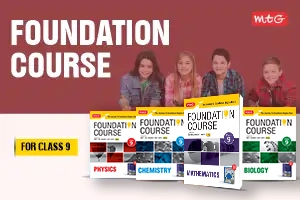
- Foundation Course Physics, Chemistry and Biology
- NCERT at your Fingertips Science
- 100 Percent Science
- CBSE 10 Years Chapterwise Topicwise Solved Papers AKA CBSE Champion
- CBSE Chapterwise Question Bank
- CBSE Score More 15 Sample Question Papers
We hope the MCQs for the CBSE Class 10 Science Chapter 5 on Life Process are helpful for your board exam preparation. To practice more you can always rely on MTG CBSE class 10 Books for success in your class 10 exams.
Keep learning and stay updated with us for more CBSE exam updates.